
Materials & comparisons
Choosing Ceiling and Partition Materials: Gypsum, Plaster, PVC, Timber or Metal
The right material is decided by the room, not the brochure — what is above the ceiling, how wet the room is, and whether you need to divide space or just cover services.
Written by Renovix Home Services · Published
The short answer
Which material should I choose for my ceiling or partition?
For most living spaces, a gypsum board ceiling on a metal frame is the practical standard: it hides wiring and air-conditioner piping, accepts downlights and cove lighting, and is fast to install and easy to finish. Traditional plaster gives a seamless skimmed surface for a flatter, more monolithic look, at a slower pace. PVC panels suit wet and humid rooms such as bathrooms because they resist moisture where gypsum does not. Timber is a feature finish, not a general ceiling — used as beams or a feature section. For partitions, gypsum and drywall on a metal stud are the default, with moisture-resistant board in wet areas and soundproof construction where quiet matters. The decision is mostly room-by-room, and the honest starting point is what the ceiling has to hide and how wet the space gets.
Key points
- Gypsum board on a metal frame is the practical standard for most living areas — light, fast and takes lighting well.
- Traditional plaster reads flatter and more seamless, but it is slower to build and repair.
- PVC suits wet and humid rooms; gypsum does not belong directly over persistent damp.
- Timber is a feature finish — used for beams and accents, not as a whole-room ceiling.
- For partitions, match the board to the room: standard gypsum, moisture-resistant in wet areas, soundproof where quiet matters.
The materials in plain terms
| Material | What it is | Where it belongs | Honest limits |
|---|---|---|---|
| Gypsum board | Manufactured panels screwed to a metal or timber frame, jointed and skimmed | Flat and L-box ceilings, partitions, bedrooms, living areas, offices | Not for persistent damp; swells and fails if water sits on it |
| Traditional plaster | Wet plaster applied and trowelled smooth over a lath or base | Older homes, repair matching, a seamless monolithic finish | Slower to build and to repair; needs a skilled hand for a flat result |
| PVC panels | Lightweight waterproof panels clipped to a frame | Bathrooms, kitchens, porches, anywhere hot and humid | A visible panel-line look; not a seamless painted ceiling |
| Timber | Solid or engineered timber planks or beams | Feature beams, accents, a warm statement section | Cost and maintenance; needs sealing and suits a feature, not a whole ceiling |
| Metal stud / frame | Galvanised steel sections forming the structure the board fixes to | The frame behind most modern gypsum ceilings and partitions | A frame, not a finish — the board on it is what you see |
In practice most homes combine these: a gypsum board ceiling on a metal frame in the living area, PVC in the bathrooms, and timber used sparingly as a feature rather than everywhere.
Choosing by room
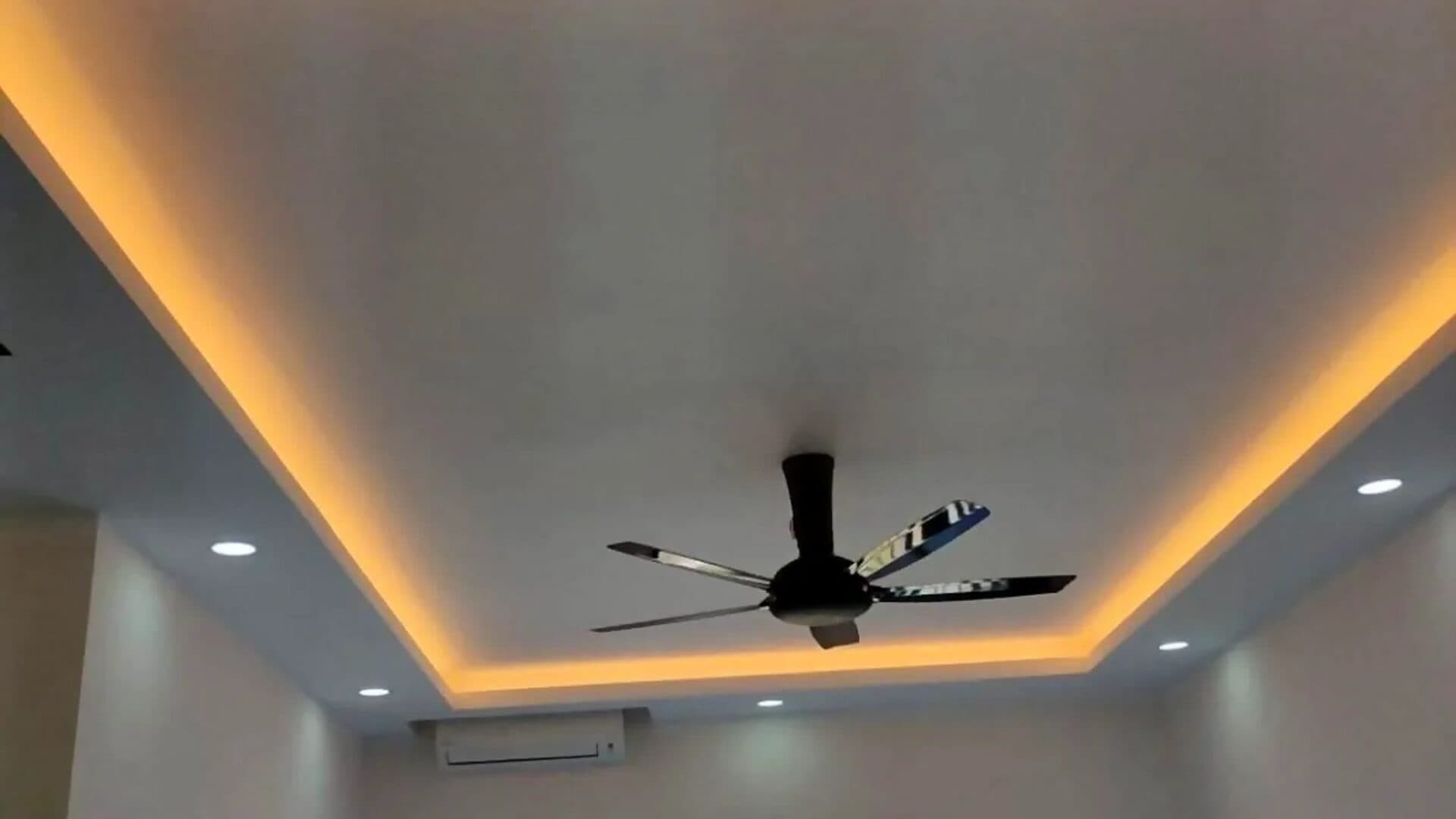
- Living and dining: gypsum board flat ceiling, or an L-box with a light trough for concealed LED strip — the most popular option for a reason.
- Bedrooms: flat gypsum board with a few downlights; keep it simple and leave access for future wiring.
- Kitchen: gypsum board is fine where the ceiling stays dry; if cooking steam is constant, a wipeable panel is the safer surface.
- Bathroom and wet kitchen: PVC or another moisture-tolerant panel, because gypsum does not forgive standing steam and splashes.
- Office or shop: gypsum or drywall partitions on metal stud for dividing space, with glass where visibility and light matter.
- Rooms that must stay quiet: a soundproof partition construction with the right infill, not just a thicker board.
Ceiling and partition are two different jobs
Owners often think of them together, and they are usually built together — but they are chosen differently. A ceiling covers the services above and shapes the light; a partition divides space and decides how sound and sight move through a room.
- Ceiling: chosen for how it hides wiring and piping, how it takes lighting, and how it survives the room's moisture.
- Partition: chosen for whether it must hold a door, block sound, resist moisture, or stay transparent — and whether it is ever meant to come down again.
- The frame matters for both: a straight metal-stud frame is what keeps a ceiling flat and a partition rigid years later.
- Non-structural means exactly that: a gypsum or drywall partition is a divider, not a load-bearing wall — anything structural is assessed before it is touched.
What drives the price
Ceiling and partition quotes move on area, height, design complexity and lighting integration, plus the board grade where moisture or soundproofing is involved. These are the published starting rates for the scopes we carry out.
| Flat Plaster CeilingSupply and install flat plaster ceiling with 9mm gypsum board, metal frame and finishing. | RM3.50per sqft |
|---|---|
| L-Box & Light Trough CeilingL-Box ceiling design with light trough for concealed LED strip, suitable for living rooms. | RM15per foot run |
| Drywall Partition InstallationSupply and install standard drywall partition with double-sided 12mm gypsum board. | RM7.50per sqft |
| Ceiling Repair (Cracked, Sagging, Water-Damaged)Repair of cracked, sagging or water-damaged plaster ceiling, including reinforcement and skim. | RM700per job |
Painting, lighting points, cornice and specialised board grades are quoted separately where they apply.
Rates below come from our published price list and are starting prices — the final quotation depends on the actual site condition and scope.
Prices start from the stated amount. Final quotation depends on actual site condition, scope, materials, accessibility and installation requirements.
Durability and the details that decide it
- Joints and corners are where ceiling problems start — good taping, jointing and a full skim keep cracks away.
- Access panels are durability, not decoration: every hidden valve, trap and drain should stay reachable without cutting the ceiling open.
- A gypsum ceiling lasts on condition, not on a fixed number of years — kept dry and well jointed it stays sound for a long time; a persistent leak shortens any ceiling's life.
- PVC in a bathroom wins by being washable, not by being indestructible — ventilation still decides how clean it stays.
- Cracks, sagging and stains are read as signals, not as a cue to repaint — they usually point at movement or moisture above.
We do not quote a lifespan figure for a ceiling or a partition, because the honest answer is that the substrate, the moisture and the detailing decide it — not the material alone.
Tell us the room, what is above it, and whether you want to cover services, divide space or both. We will recommend the material that suits the room — and be honest about the one or two places where spending more is actually worth it.
FAQs
Questions people ask about this
What is the difference between gypsum and plaster ceilings?+
Gypsum board is a manufactured panel screwed to a frame, jointed and skimmed smooth — fast to install and easy to finish. Traditional plaster is applied wet and trowelled to a seamless surface, which reads flatter but is slower to build and to repair. Most modern work uses gypsum board.
Can I use a gypsum ceiling in my bathroom?+
In a bathroom that stays steamy, gypsum is the wrong surface — persistent damp makes it swell and fail. A moisture-tolerant panel such as PVC is the safer choice there, while gypsum board remains the standard in dry living areas.
Which is better for dividing a room — drywall or glass?+
It depends on what the wall is for. Drywall on a metal stud is the standard for a private, solid division and takes paint and wall fittings. Glass keeps light and visibility moving through the space, and is often used in offices and shops where openness matters.
Does a soundproof partition cost more than a standard one?+
Yes — soundproofing is a construction choice, not a thicker board. It involves the right framing, an infill for the cavity and proper sealing at the edges, and it is quoted at a higher rate than a standard partition.
Why does my ceiling keep cracking after it is repaired?+
Recurring cracks usually mean the cause was not addressed — movement in the structure, a leak above, or a joint that was patched rather than properly re-taped. A repair that only skims the surface will crack again when the underlying cause is still there.